Llama 4 API Access: Complete Developer Guide (Scout, Maverick, ofox)
Call Llama 4 Scout and Maverick via API in 2026: model IDs, pricing across providers, working code, and when open source beats proprietary on cost.
 Ofox
Ofox 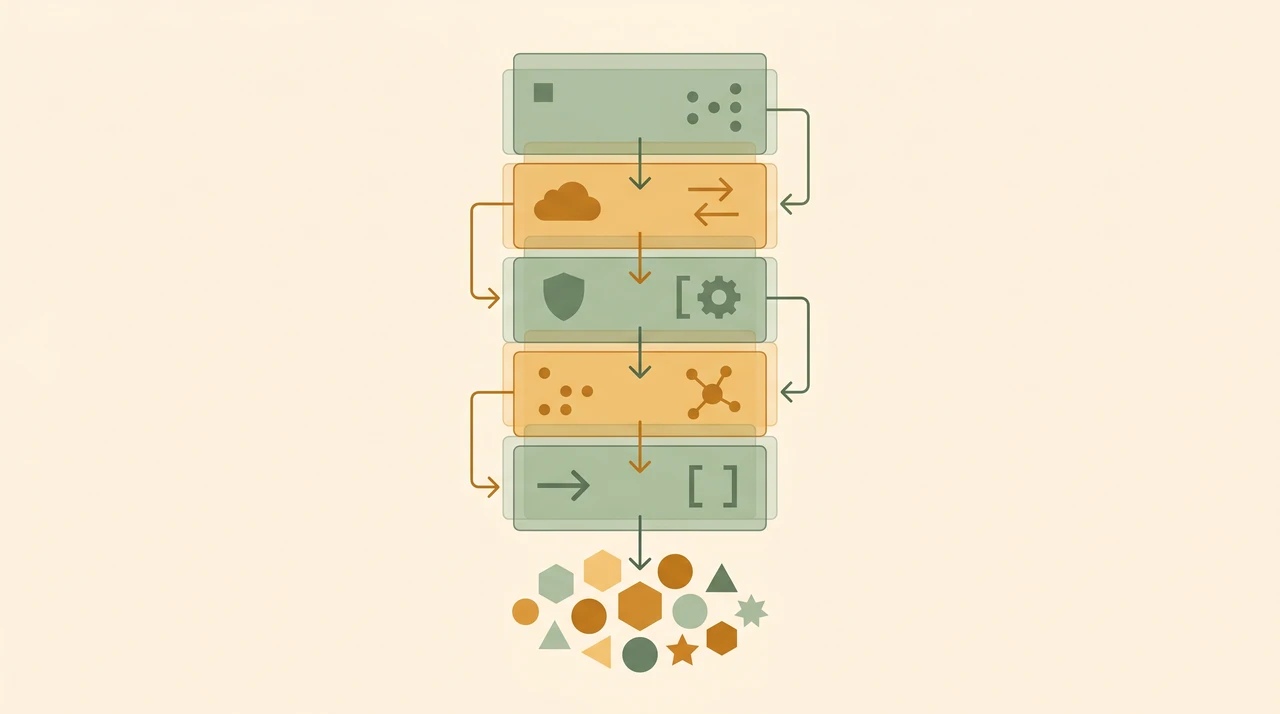
TL;DR — Llama 4 Scout has a 10-million-token context window, costs as little as $0.08/M input tokens, and runs through any OpenAI-compatible API. If you’re routing long documents, building cost-sensitive pipelines, or want to stop being dependent on a single closed-source vendor, it deserves serious consideration in 2026.
Why Llama 4 Still Matters in 2026
When Meta released Llama 4 in early 2026, the reaction split cleanly along two camps: people who looked at benchmark numbers and shrugged, and developers who actually tried to stuff a 300-page legal brief into the context window and suddenly got religion.
Scout’s 10M-token window isn’t a spec sheet flex. It’s a qualitative shift in what’s possible without chunking, summarization passes, or retrieval glue. Drop an entire codebase in. Analyze a year of customer support transcripts. Process a dataset of regulatory filings without pre-processing. Maverick’s 1M-token context window is similarly generous for most production workloads, though actual available context varies by provider (128K–1M depending on infrastructure).
Meta’s newer Muse Spark model (released April 2026) is proprietary — a deliberate pivot away from open weights. That makes Llama 4 the current ceiling for open-source, self-hostable Meta intelligence. The combination of open weights and frontier-class context depth isn’t guaranteed to stay available — worth using while it’s there.
Scout vs. Maverick: What’s Actually Different
Both models share the same architecture — 17B active parameters with Mixture-of-Experts — but differ in total parameter count and context window.
| Model | Active Params | Total Params | Context Window | Best For |
|---|---|---|---|---|
| Llama 4 Scout | 17B | 109B (16 experts) | 10M tokens | Long-document analysis, cost-sensitive pipelines |
| Llama 4 Maverick | 17B | 400B (128 experts) | 1M tokens (128K–1M by provider) | Complex reasoning, multimodal tasks |
Scout is the right call if your primary constraint is context length or cost. At $0.08–$0.15/M input tokens depending on provider, the 10M window is unmatched at that price point.
Maverick makes sense if you need better reasoning quality on complex tasks and can absorb a higher token price. The 128-expert mixture gives it more headroom on nuanced judgment. The full 1M-token context is available on providers like Fireworks AI; other providers (Groq, Oracle) offer narrower windows, so confirm before building.
Both are multimodal and handle 12 languages. The architecture decision really comes down to context depth versus reasoning quality.
Getting API Access
You have three realistic paths:
Meta’s official Llama API (llama.developer.meta.com) — launched in 2025 and currently in limited preview. Fine for experimentation, limited production availability, and requires managing a separate account.
Self-hosting — Llama 4 weights are open, so you can run Maverick on your own GPU cluster. Expect $2–$10/hour in infrastructure costs depending on setup. Worth it only if you have hard data-residency requirements or are at serious scale.
API aggregation via ofox.ai — single API key, OpenAI-compatible endpoint, covers Llama 4 Scout, Maverick, and every major proprietary model. No separate account to manage, no infrastructure to provision. This is the practical path for most teams.
Calling Llama 4 via ofox
The endpoint is https://api.ofox.io/v1. Authentication is a Bearer token — same as the OpenAI SDK pattern.
Python (openai SDK):
from openai import OpenAI

client = OpenAI(api_key="sk-your-ofox-key", base_url="https://api.ofox.io/v1")

response = client.chat.completions.create(
    model="meta-llama/Llama-4-Scout-17B-16E-Instruct",
    messages=[{"role": "user", "content": "Summarize the key risks in this contract: ..."}]
)
print(response.choices[0].message.content)
curl:
curl https://api.ofox.io/v1/chat/completions \
  -H "Authorization: Bearer $OFOX_API_KEY" \
  -H "Content-Type: application/json" \
  -d '{"model":"meta-llama/Llama-4-Scout-17B-16E-Instruct","messages":[{"role":"user","content":"Hello"}]}'
The model identifiers follow the Hugging Face naming convention used across major providers. Verify the exact model ID for Maverick on ofox.ai/models before deploying — aggregators occasionally alias names.
Rate limit on ofox is 200 requests per minute. For burst-heavy workloads, implement exponential backoff on 429 responses.
Pricing Across Providers
Llama 4 pricing varies more than almost any other model family — the spread between cheapest and most expensive provider exceeds 6x for Maverick.
| Provider | Scout Input | Scout Output | Maverick Input | Maverick Output |
|---|---|---|---|---|
| DeepInfra | $0.08/M | $0.30/M | $0.17/M | $0.60/M |
| Meta official | $0.15/M | $0.60/M | $0.15/M | $0.60/M |
| Together AI | $0.15/M | $0.60/M | $0.27/M | $0.85/M |
| ofox.ai | See ofox.ai/models | — | — | — |
Prices as of April 2026. Meta’s official pricing may reflect limited-preview rates.
The key takeaway: for Scout, providers are converging around $0.08–$0.15 input. For Maverick, Together AI runs roughly 60–80% higher than DeepInfra and Meta’s official pricing — a real gap, though smaller than it first appears. If Maverick is your target model, compare providers before committing.
For context on how these numbers compare to closed-source alternatives, see our AI API cost reduction guide and model comparison guide.
Where Llama 4 Genuinely Makes Sense
Document-scale analysis. Feeding 500K+ tokens into Claude Opus 4.7 at $25/M output gets expensive fast. Scout at $0.30/M output is more than 80x cheaper for the same window-filling exercise — the economics are hard to argue with.
Vendor risk concerns. Teams with regulatory or political constraints on which vendors they can use — government contracts, EU data-residency requirements, certain financial sector mandates — find open-source weights more defensible than a closed-source API call they can’t audit.
Batch throughput. Scout is faster to infer than many larger proprietary models. When you’re processing tens of thousands of short documents in parallel, raw throughput matters more than peak quality per call.
Self-hosting. Open weights mean you can lock the model version, air-gap the deployment, and cut the API dependency entirely. If that’s on your roadmap, the option is there.
Where Llama 4 falls short: complex multi-step agentic reasoning, tasks requiring highly nuanced instruction following, and situations where you need the best possible output on the first try. Claude Opus 4.7 and GPT-5 are ahead there. See our best AI model for agents guide for a more granular breakdown.
Limitations Worth Knowing
Maverick availability is spottier than Scout. Because Maverick’s 400B total parameter count requires significant infrastructure, some providers only offer Scout or limit Maverick to certain regions/tiers. If Maverick is critical to your stack, confirm availability before building.
The 10M context window has infrastructure implications. You can’t just dump 10M tokens into an API call and expect sub-second latency. Prefill time scales with context length, and some providers cap effective context below the theoretical maximum even if they list the model. Test your actual use case at scale before assuming the spec sheet number translates to your production latency budget.
No built-in safety filtering. Llama 4 ships without enforced output filtering by default. For consumer-facing applications, you’ll need to implement guardrails yourself — either custom prompt engineering or a dedicated moderation layer. Proprietary APIs handle this for you; open-source doesn’t.
Open weights come with the bill attached — you own the guardrails, the infra decisions, and the model versioning. If your team is set up for that, Llama 4 is one of the better API options available this year.
For teams that want to evaluate Llama 4 alongside Claude, GPT, and Gemini without managing multiple API keys, ofox.ai gives you one endpoint and consistent usage dashboards across all of them. Worth the 5-minute setup to have the option.
Frequently Asked Questions
- What are the Llama 4 model IDs for API calls?
- The standard model identifiers are meta-llama/Llama-4-Scout-17B-16E-Instruct for Scout and meta-llama/Llama-4-Maverick-17B-128E-Instruct for Maverick. Via ofox.ai, check the models page for the exact identifier used in their routing layer.
- How large is Llama 4 Scout's context window?
- Llama 4 Scout supports up to 10 million tokens — one of the largest context windows of any production model as of early 2026. Maverick officially supports a 1M-token context window. Actual available context varies by provider — Groq caps at 128K, Oracle at 512K, Fireworks AI offers the full 1M.
- How much does Llama 4 API access cost?
- Pricing varies significantly by provider. As of April 2026, Scout runs as low as $0.08/M input and $0.30/M output on cheaper providers, with Meta's own pricing at $0.15/$0.60. Maverick costs more: $0.17/$0.60 (DeepInfra) to $0.27/$0.85 (Together AI). Via ofox.ai, check ofox.ai/models for current rates.
- Can I use Llama 4 via the OpenAI SDK?
- Yes. Every major provider that hosts Llama 4 — including ofox.ai — exposes an OpenAI-compatible endpoint. You only need to change the base_url and model name. Your existing OpenAI SDK code works unchanged.
- Is Llama 4 available through ofox.ai?
- Yes. ofox.ai lists Llama 4 under its open-source model catalog. You get a single API key that works across Llama 4, Claude, GPT, and Gemini, all through the same OpenAI-compatible endpoint at api.ofox.io/v1.